
What Does a Dry Socket Look Like: Complete Visual Guide
À l’heure des décisions audacieuses, avec https://vegasplus-france.com/, des bonus pensés pour accompagner chaque mise. Jouez dans l’esprit des joueurs qui construisent leur réussite et laissez la tradition du casino guider vos décisions. L’instant est idéal pour continuer, maintenant, sans remettre à plus tard.
After a tooth extraction, especially wisdom teeth removal, knowing what a dry socket looks like can mean the difference between unnecessary anxiety and appropriately seeking urgent dental care. This painful complication occurs in 2-5% of tooth extractions, but understanding its appearance, symptoms, and differences from normal healing helps patients identify problems early and get proper treatment.
This comprehensive guide explores what a dry socket looks like in your mouth at various stages, how to distinguish it from healthy healing, and what to do if this complication develops.
What is a Dry Socket and How to Treat It
Understanding Dry Socket Formation
A dry socket (alveolar osteitis) develops when the blood clot that normally forms in the extraction site becomes dislodged or dissolves prematurely. This blood clot serves crucial functions—protecting the underlying bone and nerves while providing a foundation for new tissue growth.
When the protective clot disappears, the extraction socket exposes bone and nerve endings to air, food particles, and bacteria. This exposure creates the intense pain characteristic of dry socket, typically beginning 2-4 days after tooth extraction.
Primary Causes
Several factors increase dry socket risk:
- Smoking or tobacco use (significant risk factor)
- Poor oral hygiene
- Traumatic extraction procedures
- History of dry socket
- Oral contraceptive use
- Inadequate blood supply tothe extraction site
- Bacterial contamination
Understanding these risks helps patients take preventive measures after tooth extraction procedures.
Treatment Approaches
Professional dry socket treatment involves:
- Cleaning the socket: The dentist gently rinses the extraction site to remove debris
- Medicated dressing: A special paste containing pain-relieving medication is packed into the socket
- Pain management: Prescription or OTC pain relievers reduce discomfort
- Dressing changes: Patients return for dressing replacement every 1-3 days until healing progresses
- Antibiotics: May be prescribed if infection is present
Most dry socket cases resolve within 7-10 days with proper treatment, though the socket itself takes several weeks to heal fully.
What Does A Dry Socket Look Like?
Visual Characteristics
When asking “what does a dry socket look like in your mouth,” several distinctive visual features appear:
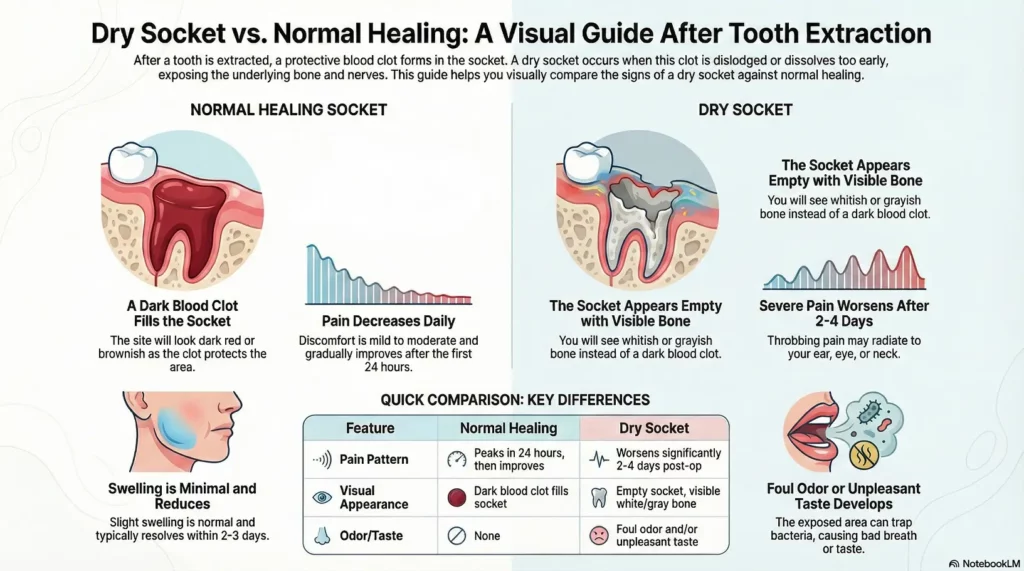
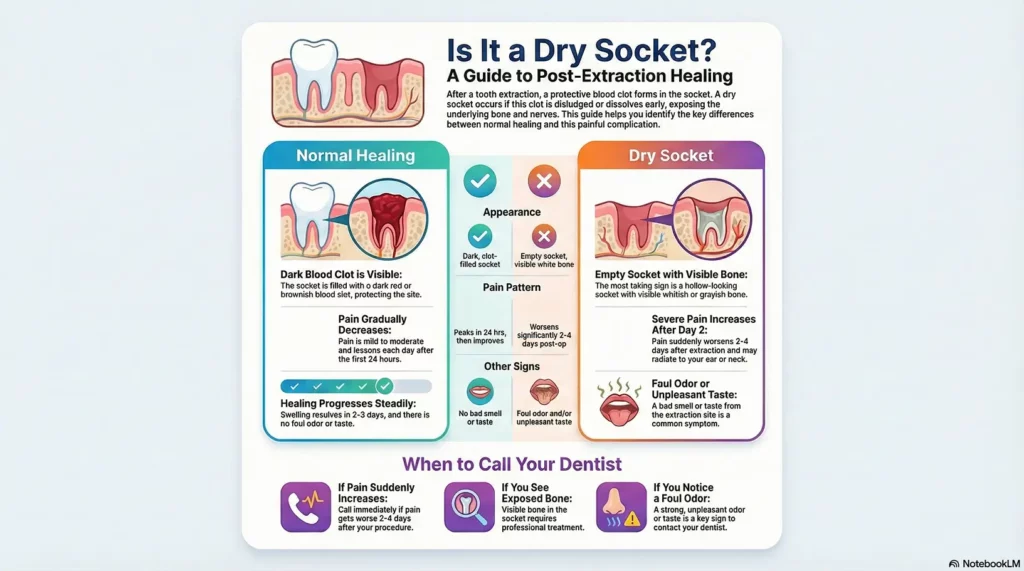
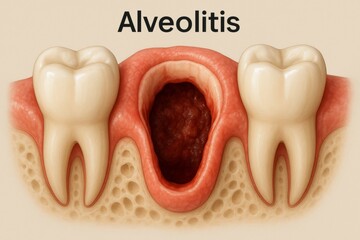
Exposed Bone: The most telling sign—visible whitish or grayish bone at the bottom of the extraction socket. This contrasts sharply with the dark red blood clot present in normal healing.
Empty Socket: The extraction site appears hollow or empty rather than filled with the protective blood clot. When wondering what a tooth dry socket looks like, this emptiness is immediately apparent.
Debris Accumulation: Food particles and oral debris may collect in the exposed socket, sometimes giving it a dirty or infected appearance.
Surrounding Tissue: The gum tissue around the socket may appear inflamed, swollen, or redder than normal healing tissue.
What Color Does a Dry Socket Look Like
Color provides important clues. A dry socket typically shows:
- White or grayish exposed bone (rather than dark red clot)
- Yellowish debris or coating (food particles and bacteria)
- Inflamed red tissue surrounding the socket
- Possible white or cream-colored pus if infection develops
This contrasts with normal healing, where a dark red to brownish blood clot fills the socket.
What Does a Dry Socket Look Like Wisdom Teeth
Wisdom Tooth-Specific Characteristics
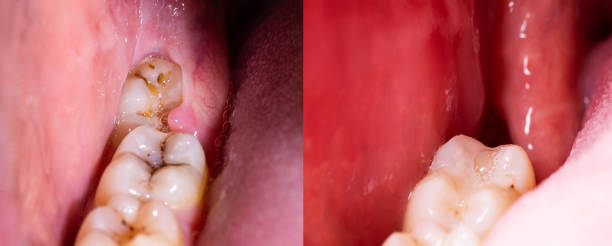
When addressing what a dry socket wisdom tooth looks like, location matters. Wisdom teeth sit far back in the mouth, making visual inspection challenging. Patients often use mirrors and flashlights to see what a dry socket looks likein the wisdom tooth areas.
The posterior location means:
- More difficult cleaning and food debris removal
- Higher risk of dislodging protective blood clots
- Harder visual confirmation of the condition
- More challenging self-care during healing
What Does a Dry Socket Look Like After Wisdom Teeth Removal
Immediately after wisdom teeth removal and in subsequent days, knowing what to expect helps identify problems. What does a dry socket look like after wisdom teeth removal, specifically involving:
Days 1-2: Normal healing shows a dark blood clot filling the socket. Days 3-4: Dry socket becomes apparent with exposed bone and severe pain. Days 5-7: Untreated dry socket may show debris accumulation and increased inflammation
Understanding this timeline helps patients recognize when normal healing has gone wrong.
A Visual Guide to Identifying a Dry Socket
What Does a Dry Socket Look Like Pictures
While this text guide describes appearance, many patients search for what a dry socket looks like,e pictures to compare with their own extraction sites. Key visual elements to identify include:
Normal Healing Socket:
- Dark red or brown blood clot filling the socket
- Smooth, pink surrounding gum tissue
- Gradual reduction in socket depth as healing progresses
- No bone visible
Dry Socket:
- Empty or partially empty socket
- Visible white/gray bone at the socket bottom
- Food debris in the socket
- Inflamed, red surrounding tissue
- The socket appears deeper than expected
What Does a Dry Socket Look Like With Stitches
Patients who received sutures wonder what a dry socket looks like with stitches. The stitches themselves don’t prevent dry socket—the blood clot beneath them does the protective work.
With stitches present:
- Dry socket still shows exposed bone through or around sutures
- The empty appearance persists despite stitches
- Pain and odor occur even with intact sutures
- Stitches may appear loose or disturbed
Stitches closing the gum tissue don’t guarantee clot stability underneath, so dry socket remains possible even with surgical closure.
Dry Socket vs Normal Healing: How to Tell The Difference
What Does a Dry Socket Look Like Vs Normal
Distinguishing between normal post-extraction healing and dry socket prevents unnecessary concern or delayed treatment. Here’s how they compare:
Normal Healing:
- Mild to moderate pain that gradually decreases
- Dark blood clot visible inthe socket
- Slight swelling that resolves within 2-3 days
- No foul odor or taste
- Ability to eat reasonably comfortably by day 3-4
Dry Socket:
- Severe, throbbing pain increasing 2-4 days post-extraction
- Empty socket with visible bone
- Pain radiating to the ear, eye, or neck on the affected side
- Foul odor and unpleasant taste
- Difficulty eating or drinking due to pain
Pain Pattern Differences
Pain timing provides crucial diagnostic information:
Normal healing pain: Peaks within 24 hours post-extraction, then gradually improves each day.
Dry socket pain: Initially follows a normal pattern, then suddenly worsens around day 3-4, becoming severe and unresponsive to standard pain medication.
This distinctive pain increases after initial improvement and is a hallmark of dry socket symptoms.
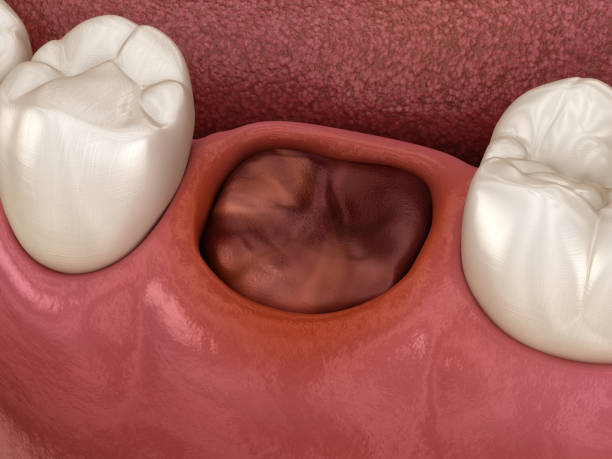
What Does a Healing Dry Socket Look Like
Recovery Stages
Once treatment begins, patients wonder what a healing dry socket looks like. The healing progression includes:
Days 1-3 of Treatment:
- Medicated dressing fills the socket
- Pain significantly decreases
- The socket appears clean with less debris
- Inflammation begins reducing
Days 4-7 of Treatment:
- Granulation tissue (pink, healthy healing tissue) begins forming
- Dressing changes become less frequent
- The socket gradually fills with new tissue
- Pain continues subsiding
Weeks 2-4:
- The socket continues filling with tissue
- Bone coverage progresses
- Normal socket healing resumes
- Complete healing takes 4-6 weeks
What Does a Dry Socket Look Like When It’s Healing
As healing progresses, the socket transitions from empty and white (exposed bone) to pink and gradually fills. What does a dry socket look like when it’s healing shows:
- Less visible bone as tissue grows
- Pink granulation tissue replaces the white appearance
- Reduced socket depth
- Decreased inflammation around the edges
- No foul odor
How Do I Know If I Have Dry Socket?
Symptom Checklist
Beyond visual appearance, several symptoms confirm dry socket:
Primary Symptoms:
- Severe pain 2-4 days post-extraction
- Pain radiating beyond the extraction site
- Partial or total clot loss from the socket
- Visible bone in the extraction site
- Foul breath or unpleasant taste
Secondary Symptoms:
- Swollen lymph nodes
- Slight fever (less common)
- Difficulty opening the mouth
- Ear pain on the affected side
Experiencing multiple symptoms, especially severe pain with visible bone exposure, strongly suggests dry socket requiring professional treatment.
When to Contact Your Dentist
Immediate dental consultation is necessary when:
- Pain increases significantly 2-4 days post-extraction
- Standard pain medication provides no relief
- Visible bone appears in the socket
- Strong foul odor or taste develops
- Any concerns arise about the healing progress
Early dry socket treatment prevents prolonged suffering and promotes faster healing.
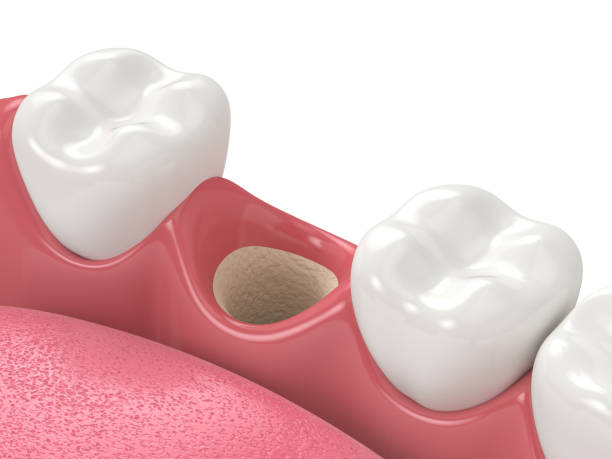
What Does a Dry Socket Look Like After Tooth Extraction
General Extraction Site Expectations
Whether wisdom teeth or other tooth extraction, a dry socket looks like after tooth extraction shows consistent features:
Immediate Post-Extraction (Hours 0-24): Normal: Blood clot forming, some bleeding.g Dry socket: Doesn’t occur this early
Days 2-4: Normal: Clot stable, decreasing pa.in Dry socket: Clot loss, increasing pain, exposed bone visible
Days 5-7: Normal: Tissue healing progresses. Dry socket: Without treatment, pain persists, socket remains empty
This timeline helps patients identify when their healing deviates from normal patterns.
Location-Specific Appearances
What a dry socket tooth looks like varies slightly by location:
Wisdom Teeth (Molars): Larger sockets, more difficult to visualize, higher dry socket risk
Premolars: Medium-sized sockets, moderately accessible for inspection
Front Teeth: Smaller sockets, easier to see, lower dry socket incidence
Regardless of location, the core features—exposed bone, empty socket, severe pain—remain consistent.
Prevention Strategies
Post-Extraction Care
Preventing dry socket is easier than treating it. Essential precautions include:
First 24 Hours:
- Avoid smoking or tobacco use
- Don’t use straws (suction dislodges clots)
- Limit talking and mouth movement
- Eat soft foods only
- Don’t rinse vigorously
Days 2-7:
- Continue avoiding smoking
- Gentle saltwater rinses after meals
- Soft food diet
- Careful brushing aroundthe extraction site
- No spitting (swallow saliva instead)
These precautions significantly reduce dry socket risk.
Frequently Asked Questions
How to tell if you have a dry socket?
You can tell if you have a dry socket by checking for severe pain that worsens 2-4 days after extraction (rather than improving), visible white or gray bone in the empty socket, foul breath or taste, and pain radiating to your ear or eye. The socket appears empty instead of filled with a dark blood clot. If you experience these symptoms, contact your dentist immediately for treatment.
Will a dry socket heal on its own?
While a dry socket will eventually heal on its own, professional treatment is strongly recommended. Without treatment, healing takes several weeks longer and involves severe, unnecessary pain. Dentists provide medicated dressings that dramatically reduce pain and promote faster healing. Self-treatment risks infection and prolonged suffering, so seeking professional care is always advised for suspected dry socket.
Can you get a tooth pulled while on prednisone?
Getting a tooth pulled while on prednisone is generally possible but requires special consideration. Prednisone (a corticosteroid) can slow healing and increase infection risk. Inform your dentist about prednisone use—they may adjust the extraction approach, prescribe antibiotics, or coordinate with your physician to temporarily modify your prednisone dose around the extraction. Never stop prednisone without medical supervision.
Can a tooth extraction cause neck pain?
Yes, tooth extraction can cause neck pain, especially after wisdom teeth removal. Pain can radiate from the extraction site to the neck, jaw, and ear due to shared nerve pathways. However, severe or increasing neck pain, difficulty swallowing, or neck swelling may indicate complications like infection or dry socket. Contact your dentist if neck pain worsens or accompanies other concerning symptoms.
What does a dry socket look like compared to normal healing?
A dry socket looks like an empty, hollow socket with visible white or gray bone at the bottom, often with food debris present. Normal healing shows a dark red or brownish blood clot filling the socket with pink, healthy gum tissue around it. The dry socket appears deeper, emptier, and whiter than normal healing, which should show progressive filling with tissue and decreasing socket visibility.
Conclusion
Understanding what a dry socket looks like empowers patients to identify this painful complication early and seek appropriate treatment. Whether wondering what a dry socket looks likein wisdom teeth areas or what a healing dry socket looks like during recovery, recognizing the characteristic signs—exposed bone, empty socket, severe pain, and foul odor—enables quick action.
The stark visual difference between what a dry socket looks like vs normal healing (empty white socket versus dark clot-filled site) makes identification straightforward once patients know what to observe. Anyone experiencing symptoms matching what a dry socket looks and feels like should contact their dentist immediately rather than enduring days of unnecessary suffering.
As dental care advances, improved extraction techniques and patient education continue to reduce dry socket incidence. However, knowing what a dry socket looks like after tooth extraction remains essential knowledge for anyone undergoing tooth removal, ensuring complications receive prompt, effective treatment when they occur.